• CLICK HERE TO VISIT THE ADEMUSOYO NOTION TEMPLATE SHOP •

a flat lay image of an opened notebook with gold pen & another brown notebook sits on top, a grey phone, a lighted candle, pens and card & letter envelopes. A text overlay that reads The PARA Method: Easy Hack To Better Organize a Notion Workspace

The PARA Method: Easy Hack To Better Organize A Notion Workspace in 2025

by | Last updated Oct 28, 2025 | 1 comment

Every day, we consume a substantial amount of information, whether actively or passively. Between scrolling on social media to receiving different notifications about news, messages, or reminders, it’s hard not to be overwhelmed. This can lead us to become excessively consumed by our thoughts leading us to falling behind on our goals and aspirations. One of the ways that I’ve found that best manage my goals, projects, while filtering out the digital noise is implementing the PARA method in Notion.

One of my favorite apps in the entire world is Notion! I’ve been using Notion since late 2019 but Notion started to really click for me when I saw this video by Marie Poulin. As someone who is multi-passionate and has tons of ideas I’ve found the PARA method to as a second brain helping me stay better organized, increased my productivity, and help me remain focused on my goals. If you’re curious about how to build your own digital knowledge management system using the PARA method. Keep reading.

What is the PARA Method?

The PARA method is a renowned and widely used technique for organizing digital information. Developed by Tiago Forte, a productivity expert and founder of Forte Labs, this methodology has been instrumental in guiding people to build a second brain. Creating a second brain proves to be an efficient method for managing new information, staying ahead of work tasks, and achieving goals. It’s especially relevant in 2025 for remote workers, solopreneurs, and digital entrepreneurs who need flexible yet powerful organizational systems.

The PARA method, which represents Projects (time-bound tasks with clear deliverables like course launches), Areas (ongoing responsibilities such as content marketing), Resources (reference materials like saved articles), and Archives (completed or inactive items like old client work), underlines the concept that all information can be categorized within these categories. By doing so, you can easily categorize and retrieve information when needed. This system works perfectly with Notion’s database structure because of Notion’s ability to link databases, filter views, and create templates. Additionally, the PARA method emphasizes the importance of regularly reviewing information to ensure that it remains relevant and useful. To get started with the PARA method, I recommend auditing your existing Notion space and trying to sort items into these PARA categories first. The PARA method is a great way to level up your productivity while maintaining a scalable, simple system that works across various tools.

Why the PARA Method Works Perfectly in Notion

Notion’s flexible workspace environment makes it the perfect platform for implementing the PARA method. Unlike rigid tools that force you into specific workflows, Notion allows you to design a system that adapts to your unique needs. Having this flexibility is why the PARA method works so well within Notion. The PARA method’s simplistic yet powerful organizational framework complements Notion’s database structure perfectly.

One of the biggest advantages of implementing PARA in Notion is the ability to create databases. This means you can have a master database with all your projects, but create filtered views showing only active projects on your dashboard. The same information can appear in multiple places without duplication, keeping everything connected and easily accessible. Additionally, you can also leverage the relational database feature which allows you to connect information across your PARA categories. For example, you can link a specific resource to multiple projects, or connect an area of responsibility to the projects that support it. This helps you build a web of information that mimics how our brains naturally make connections.

Getting Started With PARA in Notion (Beginner to Advanced)

Depending on what level you are in your Notion journey, there are different entry point to get started implementing the PARA method in Notion. Let’s break down how to implement the PARA method in Notion, from beginner to advanced:

For Beginners

If you’re just starting out with the PARA method in Notion, begin by creating four simple pages:

  • Projects: Create a page for all your active projects with clear start and end dates
  • Areas: Set up a page for ongoing responsibilities that don’t have specific completion dates
  • Resources: Establish a collection page for reference materials and knowledge
  • Archives: Design a storage space for completed or inactive items

As a beginner, don’t worry about complex setups. Simple pages with basic templates will help you get comfortable with the system.

For Intermediate Users

Once you’re comfortable with the basic structure, enhance your PARA system by:

  • Converting your simple pages into powerful databases
  • Creating custom templates for common items like project briefs or resource notes
  • Implementing tags and properties to better categorize and filter your information
  • Using linked databases to display relevant information across different sections

For Advanced Users

At the advanced level, you can automate your PARA workflow by:

  • Creating automated processes to move items through their lifecycle (from Projects to Archives)
  • Building dashboards that pull in relevant information from across your PARA system
  • Implementing relation properties to connect related items across different PARA categories
  • Using formulas to automatically update status, priorities, or deadlines

Regardless of what user level you’re at, make sure you schedule a weekly review of your PARA system to ensure everything is properly categorized and your projects are moving forward. This regular maintenance is key to getting the most out of the method. If you’re ready to get started but don’t want to build from scratch, you can download a pre-made Notion PARA template or begin by organizing your existing notes into the four PARA categories.

Deep Dive: How I Use PARA in My Notion Workspace

If you’re looking to get a full walk-through of how I implement the PARA method in Notion to boost your Notion productivity, I invite you to check out my YouTube video for a more comprehensive view, but here’s how I implement the PARA method Notion system in my workspace:

A – Areas

My areas section houses the major themes that attribute to my business. These are the things that are constantly ongoing and have various streams of work attributed to them. In the best Notion setup for productivity, your Areas section should contain things that have no start or end date—just different focuses within my business that will constantly need attention.
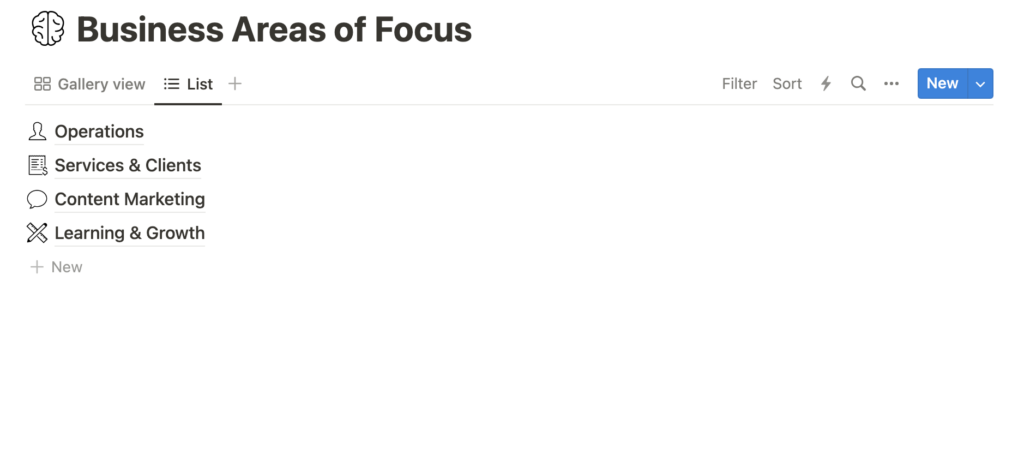
The Areas section of the PARA method

P – Projects

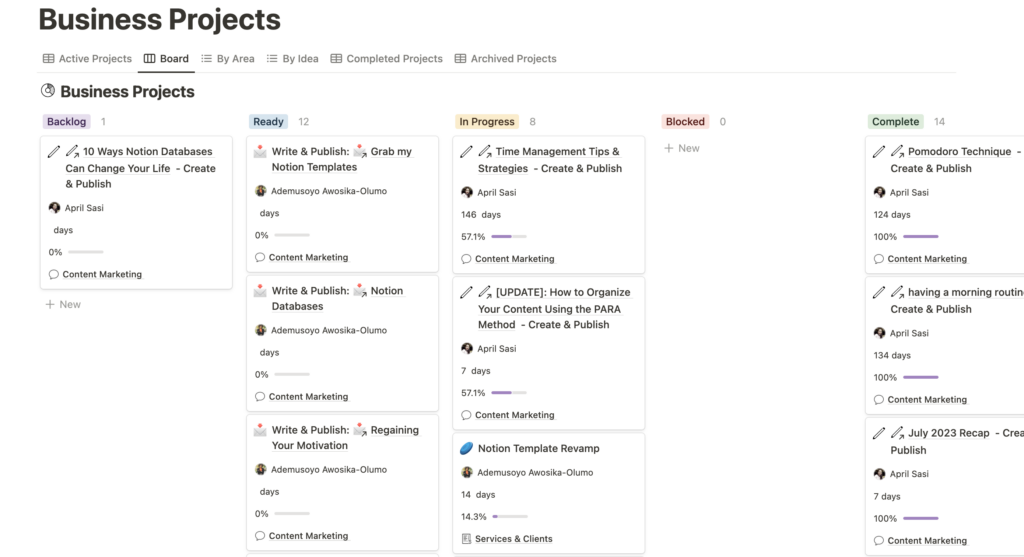
My projects section includes all things that will have a start and end date. I use my projects section to break down what I’m working on into bit-sized chunks so that I can focus on my immediate goals. This is a crucial element of any PARA method Notion system for maintaining optimal Notion productivity.

The Projects section of the PARA method

R – Resources

My resources section contains different notes and links from the learnings that I find on the internet. With these learnings, I’m able to attribute them to other Projects or Focus Areas within my business. Creating a robust resource library is essential for the best Notion setup for productivity.
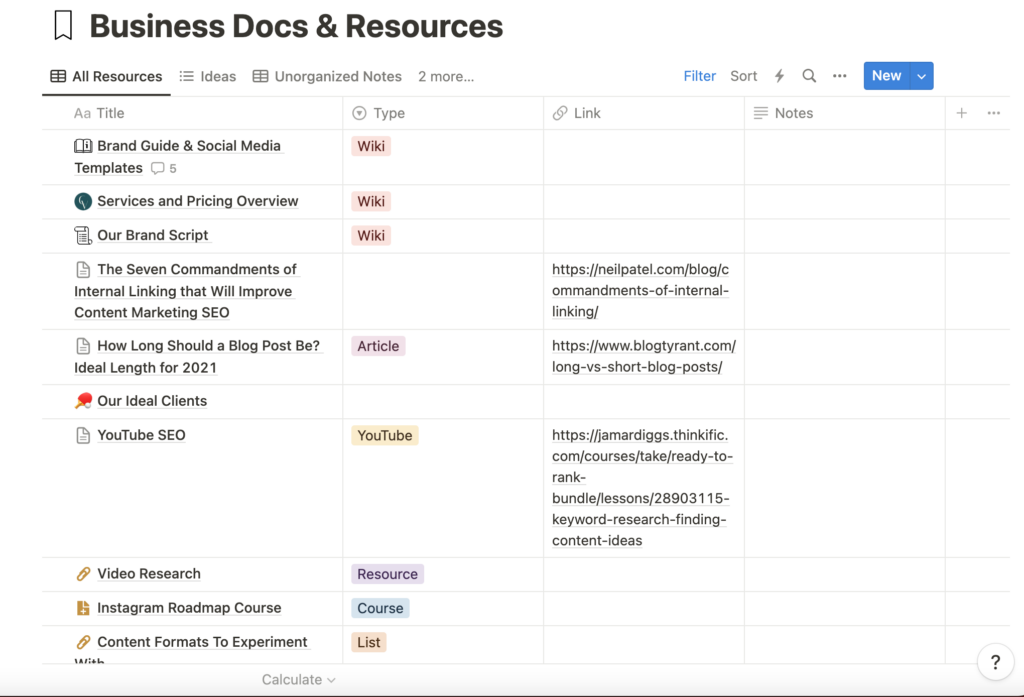
The Resources section of the PARA method

A – Archives

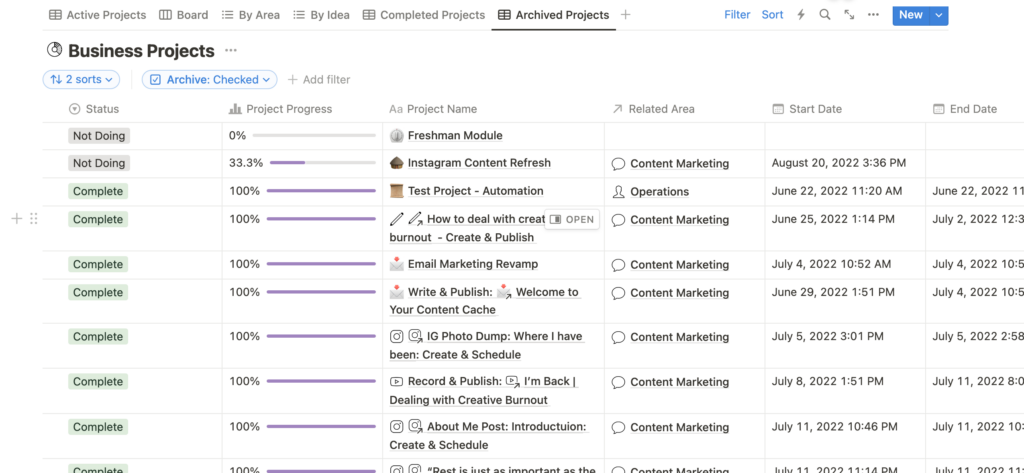
The archived section usually contains things that you may want to look at later but are inactive. For me, rather than have a dedicated archive section, I have archived views for each of the different parts of the PARA method Notion system by adding different filtered views. This helps me keep the data there as well as any other notes or todos that I may have added within the properties, enhancing my overall Notion productivity.

The Archives section of the PARA method

Common Mistakes to Avoid with PARA in Notion

When implementing the PARA method in Notion, I’ve observed several common pitfalls that can diminish its effectiveness. The most frequent mistake I see are:

1. Treating Areas like Projects.

Remember that Areas are ongoing responsibilities without end dates (like health or finance), while Projects have specific deadlines and deliverables. When you blur this line, your system loses clarity and you’ll struggle to prioritize effectively.

2. Neglecting to regularly review your Archives.

Your archived items shouldn’t be a digital landfill – they’re valuable historical data that might become relevant again. I recommend scheduling a quarterly review of your Archives to identify patterns, retrieve useful information, or permanently delete truly obsolete content.

To maintain an effective PARA system in Notion, I strongly recommend scheduling a monthly PARA review. During this time, reassess your active projects, clean up any misplaced information, and ensure everything is properly categorized. This regular maintenance prevents your digital workspace from becoming cluttered and unmanageable. The ultimate goal of PARA is to reduce friction in your workflow. If you find yourself spending excessive time organizing rather than doing, you’ve likely over-complicated your system. The best Notion setup for productivity strikes a balance between organization and action. Being aware of these mistakes will help you maintain a clean, functional system that truly enhances your productivity.

PARA vs. Other Notion Systems

When it comes to organizing information in Notion, several methodologies exist, but the PARA method stands out for its unique advantages, especially for creative entrepreneurs and multi-passionate users. Unlike other productivity systems such as Getting Things Done (GTD), Bullet Journal, or the Projects-Places-Verticals (PPV) approach, PARA offers exceptional scalability and simplicity that works seamlessly across various tools beyond just Notion. For example, the GTD method, while excellent for managing tasks and actions, can sometimes become overwhelming with its multiple processing steps. In contrast, PARA focuses on organizing information rather than tasks, making it more suitable for knowledge workers who deal with large amounts of information. Unlike the Bullet Journal method, which excels in physical notebooks but can be cumbersome in digital environments, PARA was designed specifically for digital information management.

What truly sets PARA apart is its cross-platform compatibility. The same organizational structure works effectively across Google Drive, Dropbox, Evernote, and any other digital tool you use. This means you can maintain consistency in how you organize information regardless of the platform, creating a unified system across your digital life. It also excels in its adaptability to different work styles. Whether you’re a solopreneur, creative professional, or part of a larger team, the method’s four simple categories can accommodate your specific needs without requiring complex setup or maintenance. Its simplicity makes it particularly attractive for those who find other systems too rigid or time-consuming to maintain.

If you’re hesitant about completely overhauling your current system, try layering PARA over what you already have. Start by categorizing your existing Notion pages into the four PARA categories and see how it feels. Many users find that this hybrid approach helps them transition smoothly while immediately experiencing the benefits of improved organization. When comparing “Notion vs PARA method,” it’s important to understand that they’re not competing concepts; Notion is the tool, while PARA is the methodology. Together, they create one of the most powerful productivity systems available for digital knowledge management. The flexibility of Notion’s database structure perfectly complements PARA’s organizational principles, allowing for a highly customized yet consistent system.

Closing Thoughts

The PARA method isn’t just another organizational system. It’s a paradigm shift in how we manage our digital lives. By separating your digital life into Projects, Areas, Resources, and Archives, you create clear pathways for information to flow and evolve. What makes PARA particularly powerful in Notion is how it leverages the platform’s relational databases, linked references, and customizable views to create a system that’s both structured and flexible.

Whether you’re a freelancer juggling multiple clients, a student organizing research papers, or a professional managing complex projects, the PARA method provides a sustainable framework that grows with you. Start simple, evolve as needed, and watch as your productivity and peace of mind improve. Remember that implementing PARA isn’t about achieving perfect organization. It’s about creating a system that supports your thinking and reduces cognitive load. The goal is to spend less time managing your tools and more time leveraging them to accomplish meaningful work.

Ready to transform your Notion workspace with PARA? Download my template to get started today, or reach out if you need personalized guidance on implementing this system for your specific needs.

Hi, I’m Ademusoyo!

Productivity Strategist and Notion Consultant ready to help ambitious, multi-faceted women get more time, energy and life out of each day.

Let’s work together!

You’re allowed to have ease while you’re on your grind. I’m here to help you have that.

Learn more on this topic

Related Blog Posts

Leave a Comment

1 Comment

  1. Jess

    Awesome post. Extremely helpful for a beginner Notion user like me

    Reply

Submit a Comment

Your email address will not be published. Required fields are marked *

%d bloggers like this:
x  Powerful Protection for WordPress, from Shield Security
This Site Is Protected By
Shield Security